

Are You Ready to Date Again? 10 Questions to Ask Before Swiping Right
Figuring out when you’re ready to date again after a breakup can feel like carrying something both hopeful and heavy at once.
You're excited for a fresh start and, at the same time, unsure whether your heart is actually ready to open back up. You may wonder if you’re moving forward too quickly, not quickly enough, or opening yourself to repeating patterns you’re trying hard to leave behind. You do want to build a new relationship, and you don’t want to find yourself with another partner who feels like a repeat of past mistakes.
This blog offers carefully curated, therapist-approved questions about dating, intentionally ordered to guide you from self-reflection to actionable steps, to help you understand whether you’re truly — emotionally, mentally, and physically — ready to date again.
If you move through this list and realize you need more support preparing to date again, or you find that there’s still healing to do, we’d be honored to support you as you consider reentering the dating world. Book a free consultation here.

Are you ready to date again?
Ask yourself the following questions:
1. Have I given myself space to grieve my past relationship?
Grief isn’t only reserved for long-term partnerships or traumatic endings; it can surface after any relationship that felt like it shifted your expectations or the future you thought you were building. Even if the breakup was “for the best,” there’s still a real loss to acknowledge. You don’t need to be completely healed to date again, but you do need enough emotional space that a new connection isn’t simply filling a void of grief, or giving you a distraction from feelings that still need attention.
Reflection: When you think about the relationship or its ending, what emotions still come up? If sadness, anger, or longing feel especially present, it may be worth giving yourself a bit more time and care before inviting someone new into your world.
2. Why do I want to date right now?
This question might seem obvious, but people choose to date for many different reasons. Some of these reasons support a healthy, fulfilling relationship, and others that can lead to more confusion or pain.
Being honest about your motivation helps you understand whether you’re moving from genuine readiness or from loneliness, pressure, or the desire for validation. Clarity here can set you up to date in a way that feels aligned with your long-term hopes rather than distract from short-term emotions.
Reflection: What’s driving your interest in dating right now? Loneliness, comparison, curiosity, or true openness to connection? Notice which answers feel like a calm starting point for a relationship, and which point to places where you may still need more support or healing.
3. Am I still in contact with my ex? How does that feel?
Some people stay casually connected after a breakup, others keep a quiet door open “just in case,” and some share ongoing responsibilities (like children, pets, or financial ties) that make contact unavoidable.
What matters most isn’t whether you’re in touch, but how that contact impacts you.
If interactions with your ex feel murky, confusing, hopeful, or activating, it can make dating someone new more complicated and cloud your ability to see the new relationship clearly.
Reflection: When you think about the current connection with your ex, do you feel settled, calm, and neutral, or are you pulled back into old emotions or patterns? Your answer can help you understand whether you have enough emotional closure to welcome someone new.
4. How does the idea of dating feel in my body?
Maybe you’re excited to date again and already imagining cute Heights wine bars or cozy Houston coffee shops for that future first date. But your body has opinions, too, and it can be important to listen.
When you picture going on a first date, do you feel:
Excited or curious?
Tense or overwhelmed?
Shut down, numb, or bracing yourself?
If dating feels more like danger, there’s something inside that still needs care. And if you have a history of trauma, abuse, neglect, or betrayal, it’s especially important to make sure attending to your body’s response is part of your dating process.
Reflection: Take a moment to notice your physical response when you imagine dating again: does your body lean in or pull back? Your reaction can tell you a lot about what you’re ready for and what may still need attention.
5. Do I have people who support me while I date?
It is easy to get swept up in late-night texting, early chemistry, and all the emotions that come with a new connection, and it can be just as easy to have this new spark inspire anxiety, insecurity, and overwhelm. Having existing support makes the process of exploring a new connection feel steadier and less overwhelming. Therapists, friends, or chosen family can help you stay grounded when you’re ready to spiral into overthinking or self-blame.
Reflection: Who are the people you can turn to for perspective, reassurance, or a reality check while you date? Noticing where you have support, and where you might need more, can help you move into dating with confidence and clarity.
6. Do I understand the patterns I tend to repeat in relationships?

Everyone has patterns in their relationships. It may be choosing emotionally unavailable partners, rushing intimacy, ignoring red flags, or trying to fix people. You do not need to have every pattern mapped out (or even resolved), but having some awareness of your tendencies helps you set clearer expectations. When you understand your patterns you’ll notice when you’re repeating them, allowing you to choose partners who are a better fit and treat you well.
Reflection: Think back on past relationships and notice what you tended to overlook, overdo, or tolerate. What themes show up more than once, and what might you want to approach differently next time? You may consider asking a trusted friend or your therapist if they have noticed any patterns in your relationships.
7. Do I understand the role I played in how my last relationship ended?
Every relationship has two (or more) people who contribute to the overall dynamic, even if one partner’s behavior was more harmful or difficult.
Understanding your own part is not about blame. It is about noticing how you showed up (for better or worse), what you needed but did not ask for (or asked for in ways that didn’t invite connection), and what you might want to handle differently in the future.
Reflection: When you (gently!) look at the end of your last relationship, what do you notice about your communication, boundaries, needs, or responses? What feels like yours to learn from, and what feels like it belongs to the other person or the situation itself?
Important Note for Survivors of Intimate Partner Violence: If you experienced abuse or violence in your last relationship, this question can feel complicated. Survivors often over-internalize blame, even when they were not responsible for what happened. In these situations, it can be especially important to have professional support from someone who understands this dynamic, so you can explore this question safely and without self-blame.
8. Am I comfortable setting boundaries (and actually keeping them)?
Healthy dating requires a few key skills: saying no, sometimes slowing things down, asking for what you need, and walking away when something doesn’t feel right. What all these boil down to is the ability to set, communicate, and reinforce your own boundaries, not just in calm moments but even when it feels difficult.
If these skills still feel unfamiliar or scary, you are not alone. Many, many people struggle with effective boundary setting. Boundaries are something you can build and strengthen over time, either before you begin dating or alongside the process.
Reflection: When you think about past relationships, how often did you speak up for your needs or hold firm when something felt off? Noticing these moments can help you understand what skills you may want to strengthen as you move into dating again.
9. Do I know what I am looking for this time around, and do I trust myself to choose differently?
Clarity does not have to mean creating a rigid list of ideal partner traits; dating often goes better if you’re willing to meet people where they are, so you don’t build a relationship based on potential, or surface-level traits. Clarity is most useful when you know how you want to feel in a relationship.
For example:
• I want to feel emotionally safe.
• I want someone who communicates clearly so I know what’s going on.
• I want a partner who respects my time and boundaries so I feel respected and don’t feel pressured.
• I want to move at a pace that feels comfortable for me.
Understanding your dealbreakers and your green flags helps you avoid falling into old familiar (but painful!) patterns.
This question also touches on something deeper. After heartbreak or betrayal, trust in others often becomes tangled with trust in yourself. If you find that you doubt your intuition or feel afraid you will repeat old mistakes, slowing down and reconnecting with your own inner guidance can make the dating process feel steadier and far less overwhelming. This can be your first step in rebuilding self-trust.
Reflection: Make a list of what you are looking for as you start again. Do not think in terms of a partner’s traits, but how you want to feel in the relationship. Use those feelings as your guideposts the next time you connect with someone new.
10. Do I have a realistic, intentional approach to how I want to date?
Giving yourself some (gentle!) structure as part of your dating process can help you stay connected to your values as you date. Asking yourself a few practical questions can make the process feel more intentional and less overwhelming.

For example:
How much time do I have available to put into dating?
Do I want to use dating apps, and if so, which ones feel right for me?
What type of communication feels good and supportive to me?
What relationship structure feels aligned for me, such as monogamy or polyamory, or something else?
What are my boundaries around physical intimacy in the dating process, including when I feel comfortable being physically close with someone?
What am I not willing to compromise on early in the process?
How capable do I feel in communicating my feelings, needs, and boundaries to someone new?
Having clarity about these areas can help you avoid slipping back into old dynamics and make the dating process feel more aligned with your needs.
Reflection: Take a moment to answer the questions that feel most relevant to you. What themes do you notice about the kind of dating experience you want to create for yourself this time around?
Download the full guide!
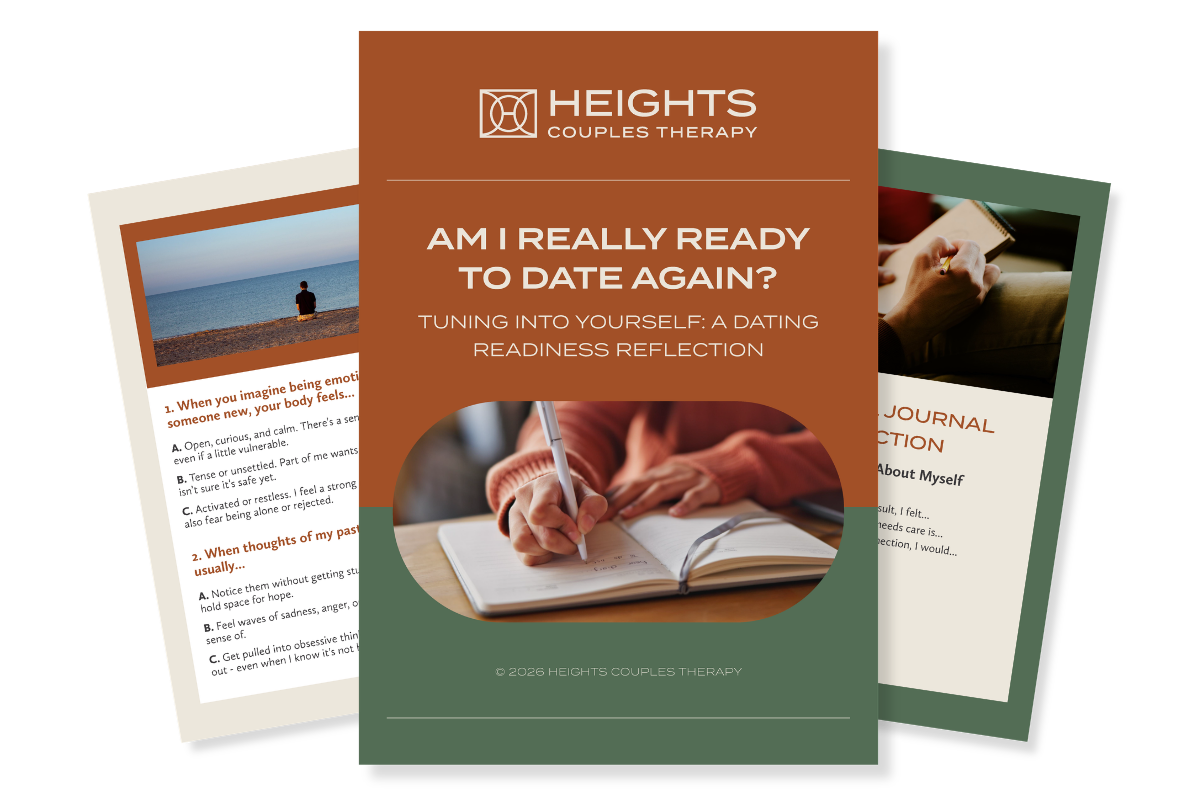
If you read through these questions and realized you’re not quite ready yet, or you want guidance as you start dating, we’re here to support you.
At Heights Couples Therapy in Houston, we support individuals who are healing after heartbreak and learning how to approach dating in Houston with more clarity, intention, and self-trust.
If you’re healing from breakup pain, navigating unhealthy relationship patterns, or feeling unsure how to trust again, therapy with a Heights Couples Therapy counselor can help you feel more grounded and confident in your dating choices.