

How to Rebuild Self-Trust After a Relationship Ends: 5 Steps to Feeling Like Yourself Again
Whether you’re thinking about dating again or simply learning how to feel grounded in yourself, this guide offers five intentional steps to help you reconnect with your sense of self-trust, chosen by a relationship therapist in Houston, to help you move forward with more clarity, steadiness, and self-compassion.

When your heart feels fractured after a breakup (even one you knew needed to end) you’re often left with more questions than answers.
Will I ever feel safe in love again? Can I trust myself to choose differently next time? How do I open my heart without losing myself?
While these questions may seem to point toward what comes next, they are connected to something deeper: your sense of self-trust. After heartbreak, it’s absolutely normal to question your judgment, your past choices, and even your ability to know what you need. Rebuilding that inner trust is often the most important first step to healing.
If you read through this list and realize you need more support healing after heartbreak, we’d be honored to offer that support to you. Book a free consultation here.

How can you rebuild self-trust after a relationship ends?
1. Allow yourself to grieve what was lost
When a relationship ends, it is not just the person you lose. It’s the version of yourself you were in that relationship, the future you imagined, the community connected to this partner, and even the sense of safety and belonging the relationship provided. Even when a breakup was necessary or long overdue, grief can still show up, sometimes in quiet and unexpected ways.
Many people try to move past this step quickly, telling themselves they should be “over it by now.” This is further exacerbated by cultural messages or friends urging you to just move on or “put yourself out there.”
But grief does not follow a timeline, and pushing it away delays healing rather than speeding it up. Instead, allow yourself to name what was lost and give yourself the space to feel and process it. This is a micro step to show yourself that your experiences matter and your feelings deserve care and attention.
Reflection: What parts of the end of the relationship or the loss of the future you imagined still feel tender? What have you not yet given yourself permission to grieve?
2. Separate your self-worth from the outcome of your relationship
After a breakup, it is common to internalize what happened. Many people turn inward and blame themselves for every moment that went wrong. It’s easy to fall into hours of replaying the moments you wish you had handled differently, or wonder if something about you made the relationship fail. Over time, this can quietly erode self-trust because it does not account for the full dynamics of the partnership.
The truth is: relationships end for many reasons, most of which are influenced by timing, compatibility, and each person’s capacity at that moment. The end of a relationship is not a measure of your worth.
Rebuilding self-trust begins when you start to gently loosen the belief you were “too much,” “not enough,” or fundamentally flawed.
Reflection: When you think about the relationship ending, what stories do you tell yourself about your role in it? Are those stories rooted in truth, or in self-blame? Where might you offer yourself more compassion?
3. Reorient to who you are outside of a relationship.

After a breakup, it can feel like all of your identity was wrapped up in your relationship. It becomes clear how much of your time, energy, or sense of purpose was tied to your partner.
Rebuilding self-trust involves reconnecting with who you are when you are not orienting around someone else’s needs or expectations.
This might look like returning to old interests, rediscovering what brings you calm or joy, or simply noticing what helps you feel like yourself again. This is not a rush to reinvent yourself, but rather to call the parts of you that were always there to come forth again.
Reflection: What helps you feel grounded, steady, or more like yourself? What parts of you feel ready to be reclaimed or nurtured again?
4. Practice self-trust in small, everyday ways
Self-trust isn’t always rebuilt through large, life-changing actions. Often, it is best developed through the small, consistent choices of listening to yourself and honoring what you need. This might mean saying no when something does not feel right, taking a break when you are tired, or choosing what feels supportive rather than what you think you “should” do.
You do not need to have everything figured out to move forward. Each small act of self-attunement strengthens your confidence and reminds you that you can take care of yourself, even in uncertainty or overwhelm.
Over time, these moments add up and create space for healing, rediscovering core parts of yourself, and a steadier foundation for secure connection.
Reflection: What is one small way you can practice trusting yourself this week? It might be a boundary, a decision, or simply listening to your own pace.
5. Deepen self-trust when you return to dating.
Once you’ve done meaningful healing work and begun to feel steadier in yourself, you may feel ready to start dating again. Rebuilding self-trust before and during this process makes a profound difference in how you show up and how you choose partners.
Self-trust in the dating world means paying attention to your internal cues first, including your instincts about pace, safety, connection, and boundaries. It involves noticing when fear, urgency, or old patterns appear and responding to those with care. It means letting your needs guide your decisions rather than external expectations or pressure.
Dating will inevitably have challenges, and there may be moments when you feel all your healing went out the window. It’s important to remember this is normal. Rebuilding self-trust after a breakup is about consistently anchoring into values and emotional needs and offering yourself compassion when you falter. Self-trust allows you to slow down when something feels off, lean into curiosity when something feels good, and adjust your pace without guilt.
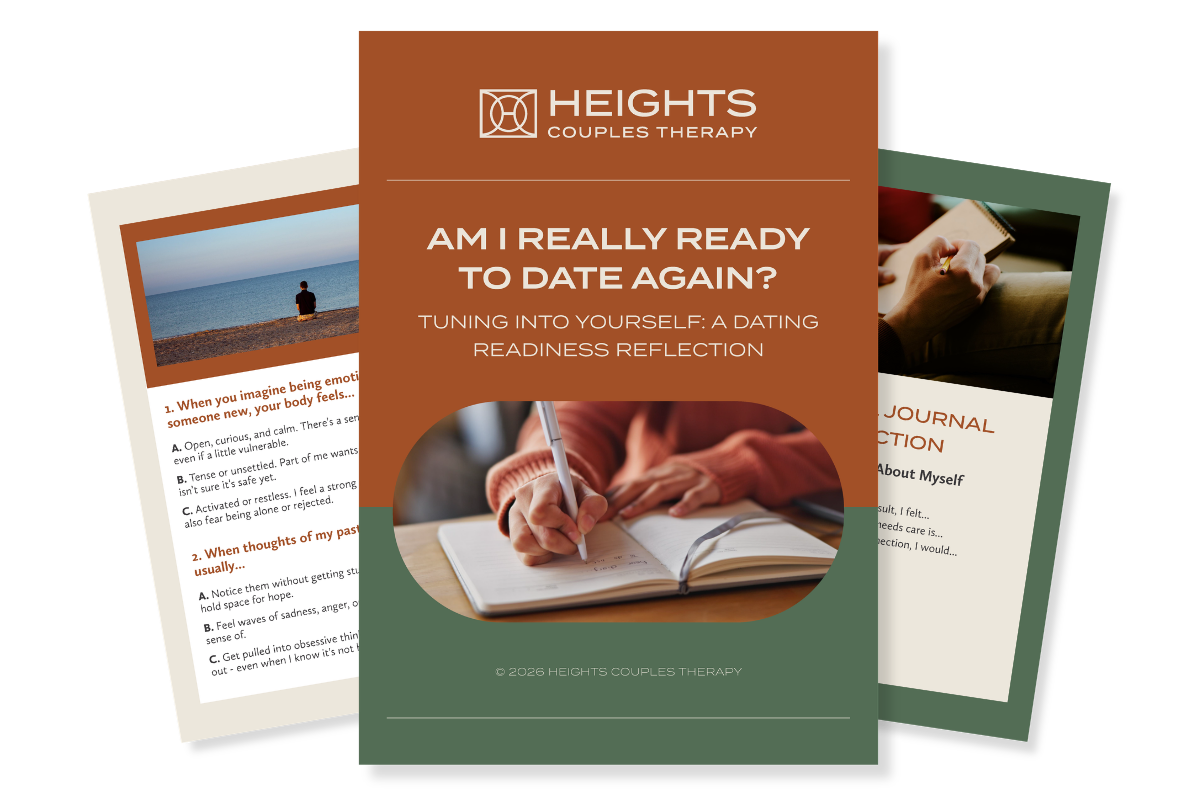
Reflection: For practical, in-depth questions, start with our downloadable questionnaire, “Am I Really Ready to Date Again?”, then explore our guide: Are You Ready to Date Again? 10 Questions to Ask Before Swiping Right
If you realize you may need more support in rebuilding self-trust after a breakup, we’re here to help you.
At Heights Couples Therapy in Houston, we support individuals who are healing after heartbreak and learning how to approach dating with more clarity, intention, and self-trust.
If you’re healing from breakup pain, navigating unhealthy relationship patterns, or feeling unsure how to trust again, individual relationship therapy can help you feel more grounded and confident in your dating choices.